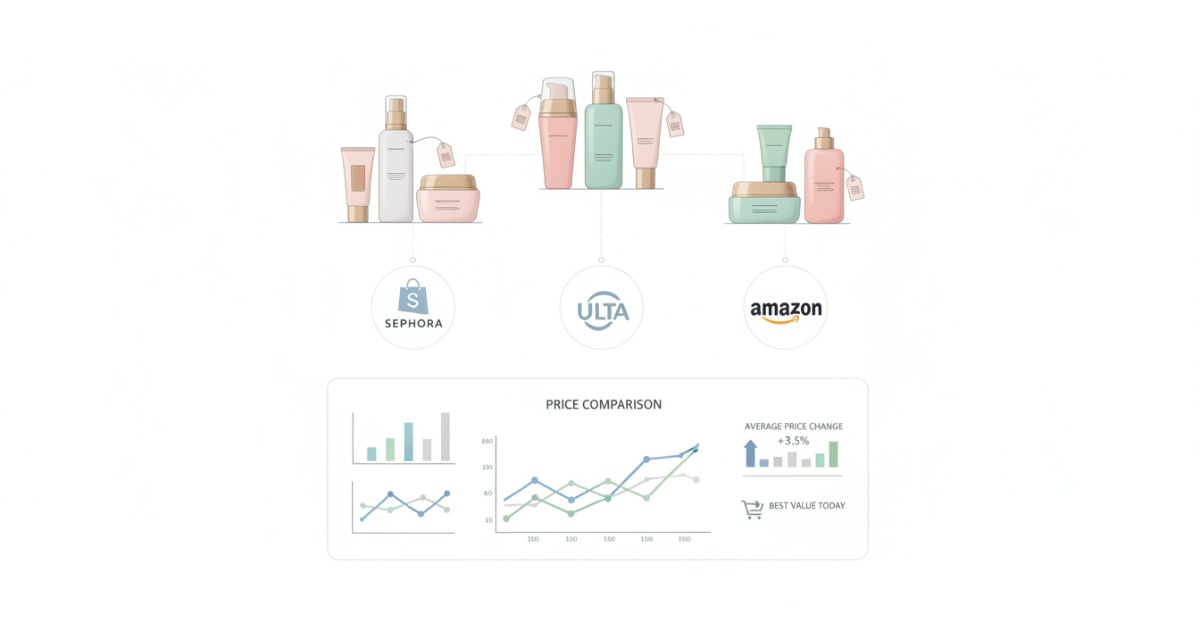
Beauty ecommerce product data is the structured information that describes, tracks, and monitors beauty products sold online. It includes pricing, ingredients, reviews, ratings, availability, images, and retailer-specific attributes. Brands need this data to make accurate decisions, protect margins, and stay competitive in fast-moving online marketplaces.
In beauty ecommerce, decisions based on assumptions fail quickly. Data-driven brands win because they see changes early and act faster.
What Is Beauty Ecommerce Product Data?
Beauty ecommerce product data refers to all product-level information collected from online retail platforms, brand websites, and marketplaces. This data is continuously updated and reflects how products are listed, priced, reviewed, and sold across digital channels.
It typically includes:
- Product names, SKUs, and variants
- Pricing and discount history
- Ingredient lists and claims
- Customer reviews and ratings
- Product images and descriptions
- Availability and stock status
- Retailer and marketplace coverage
Unlike internal product catalogs, beauty ecommerce product data shows how products appear and perform in the real market.
Why Beauty Ecommerce Product Data Matters More Than Ever
The beauty market is crowded and volatile. New products launch daily. Prices change hourly. Consumer sentiment shifts fast.
Without reliable product data, brands operate blind.
Key reasons this data is critical:
- Online price wars erode margins quickly
- Inconsistent listings damage brand trust
- Poor review visibility hurts conversions
- Missing products lead to lost revenue
Beauty ecommerce product data turns market chaos into structured insights.
How Beauty Brands Use Ecommerce Product Data
1. Price Monitoring and Control
Online beauty pricing is rarely stable. Marketplaces, resellers, and retailers adjust prices constantly.
With accurate beauty ecommerce product data, brands can:
- Track real-time pricing across platforms
- Identify unauthorized discounting
- Enforce minimum advertised price policies
- Maintain consistent brand positioning
Without this data, pricing decisions rely on outdated snapshots.
2. Product Catalog Accuracy
Incorrect product listings reduce trust and sales.
Brands use beauty ecommerce product data to:
- Detect missing or incorrect attributes
- Fix ingredient list mismatches
- Ensure shade, size, and variant accuracy
- Align descriptions across retailers
Accurate catalogs directly improve discoverability and conversion rates.
3. Review and Sentiment Analysis
Customer reviews influence buying decisions more than ads.
Product data enables brands to:
- Track review volume and rating changes
- Identify recurring complaints or praise
- Compare sentiment against competitors
- Prioritize product improvements
This insight feeds into product development, marketing, and support teams.
4. Assortment and Availability Tracking
Out-of-stock products equal lost revenue.
With beauty ecommerce product data, brands can:
- Monitor stock levels across sellers
- Spot distribution gaps early
- Identify high-demand products
- Improve inventory planning
Availability intelligence supports both sales and supply chain teams.
Who Needs Beauty Ecommerce Product Data?
This data is not limited to large enterprises.
Key users include:
- Beauty brands and manufacturers
- Ecommerce and marketplace teams
- Pricing and revenue managers
- Product and category managers
- Market research and analytics teams
Any organization selling or tracking beauty products online benefits from structured product data.
Common Pain Points Without Product Data
Brands that lack beauty ecommerce product data face predictable problems:
- No visibility into competitor pricing
- Inconsistent product listings across platforms
- Slow response to negative reviews
- Manual tracking that does not scale
- Poor forecasting and planning
These issues compound over time and directly impact revenue.
What Brands Expect From Beauty Ecommerce Product Data
Brands do not want raw data dumps. They expect usable intelligence.
Core expectations include:
- Clean, structured, and normalized data
- Broad retailer and marketplace coverage
- Frequent updates and historical tracking
- Easy integration with internal tools
- Clear insights tied to business actions
When product data meets these standards, teams act with confidence.
How Beauty Ecommerce Product Data Supports Growth
Growth in beauty ecommerce depends on speed and accuracy.
Product data helps brands:
- Launch products with competitive positioning
- Adjust prices before revenue drops
- Improve listings that underperform
- Identify white-space opportunities
- Benchmark performance market-wide
In short, it supports smarter decisions across the product lifecycle.
Final Takeaway
Beauty ecommerce product data is no longer optional. It is the foundation of modern beauty retail strategy.
Brands that invest in reliable product data gain:
- Market visibility
- Pricing control
- Catalog consistency
- Customer insight
- Scalable growth
Those who ignore it fall behind quietly, then suddenly.
In beauty ecommerce, the brands that win are the ones that see the market clearly and act early.