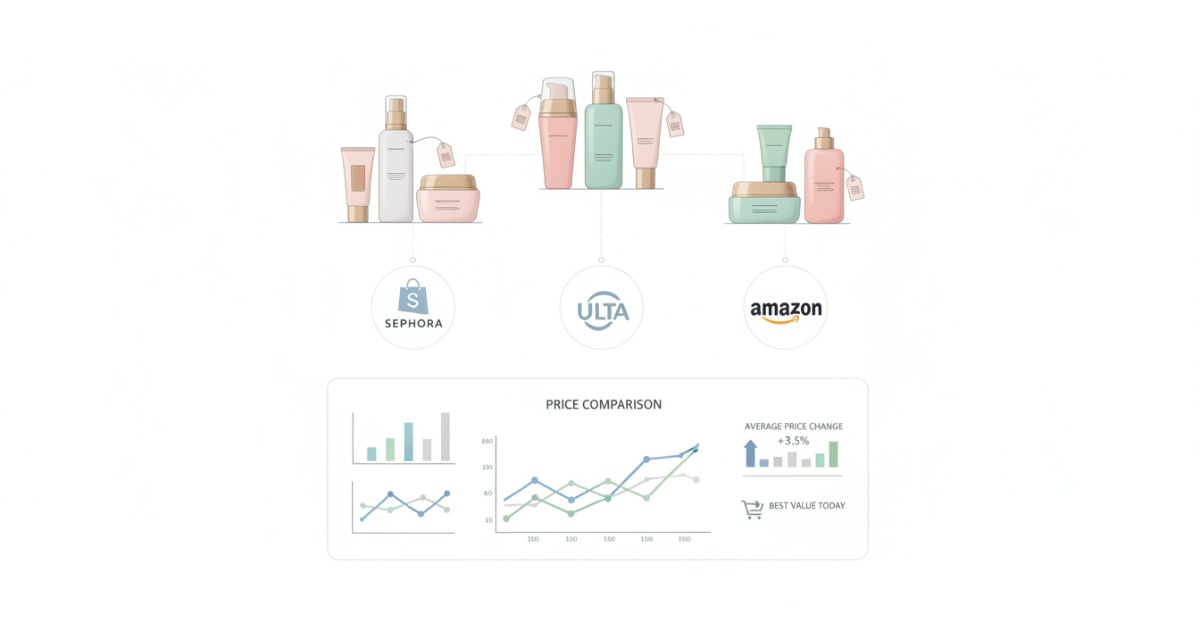
Beauty brands can find product gaps by analyzing recurring complaints, feature requests, low-rating patterns, sentiment, and feedback from specific consumer groups. This process, called product gap analysis, shows where existing beauty products fail to meet customer expectations and where new products, reformulations, packaging improvements, shades, sizes, or formats could create demand.
What Is a Product Gap in the Beauty Industry?
A product gap is an unmet customer need that current products do not fully address.
A product gap may involve:
- A missing product
- A missing shade
- An unsuitable texture
- An unwanted fragrance
- Poor packaging
- Limited product sizes
- Weak performance
- An unavailable ingredient option
- A formulation that does not suit a specific skin type or concern
For example, customers may like a moisturizer’s hydration but repeatedly complain that it feels heavy or greasy. That pattern could reveal a product gap for a lightweight moisturizer with similar hydration benefits.
Effective product gap analysis answers three questions:
- What do customers want?
- What problems do existing products create?
- Which customer needs remain underserved?
Why Customer Reviews Are Valuable for Product Gap Analysis
Customer reviews show how beauty products perform in real-world use. Product descriptions explain what a brand promises, but reviews reveal whether customers believe the product delivers on that promise.
Positive reviews identify valuable product attributes, such as:
- Long-lasting wear
- Comfortable texture
- Effective hydration
- Accurate shade matching
- Easy application
- Pleasant fragrance
- Convenient packaging
Negative reviews reveal potential product gaps, including:
- Poor performance
- Irritation
- Incorrect shade representation
- Difficult application
- Weak durability
- Unpleasant scent
- Leaking or wasteful packaging
- Insufficient product quantity
A large beauty reviews dataset allows brands to analyze these patterns across products, brands, retailers, categories, ratings, and consumer segments.
6 Ways to Find Product Gaps From Customer Reviews
1. Identify Recurring Customer Complaints
Recurring complaints are one of the strongest signals in product gap analysis.
Group reviews by common complaint themes, such as:
- Product performance
- Texture
- Fragrance
- Packaging
- Application
- Longevity
- Results
- Product size
- Skin irritation
- Shade accuracy
A single complaint may reflect an individual experience. The same complaint appearing across hundreds of reviews indicates a broader product weakness.
For example, if customers repeatedly describe a foundation as drying, a hydrating foundation or more moisturizing formula could address an identifiable product gap.
To prioritize complaints, measure:
- Number of reviews mentioning the issue
- Percentage of negative reviews containing the issue
- Average rating among affected reviews
- Frequency across competing products
- Severity of the customer problem
2. Find Frequently Requested Features
Customers often state what they want directly in their reviews.
Search for phrases such as:
- “I wish...”
- “Would be better if...”
- “I would buy this if...”
- “I wish they made...”
- “Please make...”
- “I couldn’t find...”
- “This needs...”
- “I would prefer...”
These phrases can reveal demand for:
- New shades
- Fragrance-free formulas
- Sensitive-skin options
- Larger or travel-size packaging
- Refillable containers
- Better applicators
- Longer wear
- Lighter textures
- Different finishes
- Alternative ingredients
Repeated requests are especially valuable because they connect a specific customer frustration with a specific product improvement.
3. Analyze Reviews by Skin Type and Consumer Attributes
Overall ratings can hide important differences between consumer groups.
Analyze review sentiment and complaints alongside available attributes such as:
- Skin type
- Skin tone
- Skin concern
- Age range
- Hair color
- Eye color
- Product usage preferences
For example, a foundation may have a high overall rating but receive consistently negative feedback from customers with deeper skin tones because the shade range is limited or undertones are inaccurate. That pattern could indicate a product gap for more inclusive shades.
Similarly, a cleanser may perform well overall but receive poor feedback from customers with sensitive skin. The opportunity may be a gentler version rather than a completely new product category.
The available BeautyFeeds data fields can help brands determine which attributes are available for deeper customer segmentation.
4. Compare Ratings With Review Sentiment
Ratings show how customers score a product. Review text explains why they give that score.
A product with a 4.5-star rating may perform well overall while still having a recurring weakness that prevents higher satisfaction. For example, customers may love the formula but dislike the pump, scent, or packaging.
Combine:
Rating + Review Text + Sentiment + Product Attributes
This analysis can reveal:
- High-rated products with one recurring weakness
- Low-rated products with one fixable problem
- Positive attributes that should be preserved
- Negative attributes that require reformulation
- Differences between customer segments
For example, if a product has strong ratings for hydration but negative sentiment around fragrance, a fragrance-free version could represent a clear product opportunity.
5. Compare Competitor Products
Analyzing only your own reviews provides an incomplete view of the market. Competitor reviews show whether a problem is unique to your product or common across the category.
Compare competing products based on:
- Average rating
- Rating distribution
- Positive attributes
- Negative attributes
- Recurring complaints
- Requested features
- Consumer preferences
- Segment-specific sentiment
For example:
- Brand A may offer excellent performance but poor packaging.
- Brand B may have attractive packaging but inconsistent results.
- Brand C may have a strong formula but limited shades.
This comparison could reveal an opportunity for a product that combines strong performance, reliable packaging, and broader shade coverage.
Competitor review analysis makes product gap analysis more actionable because it shows where customer expectations remain unmet across the market.
6. Find Underserved Consumer Needs
The strongest product opportunities often come from consumer groups that existing products do not adequately serve.
Look for recurring feedback related to:
- Skin concerns
- Skin types
- Skin tones
- Ingredient preferences
- Formulation preferences
- Product formats
- Accessibility needs
- Climate or lifestyle requirements
Examples include:
- Makeup for deeper skin tones
- Skincare for highly sensitive skin
- Fragrance-free body care
- Lightweight products for humid climates
- Richer formulas for dry skin
- Travel-friendly packaging
- Products for mature skin
- Products with simpler ingredient profiles
Instead of asking only, “Which products are popular?” ask:
“Which customer needs are still not being adequately served?”
That question helps brands identify more specific and defensible product opportunities.
What Beauty Brands Should Look for in Review Data
Structured review data helps brands move from individual comments to measurable product insights.
Data point | What it can reveal
Rating | Overall customer satisfaction
Review text | Customer experiences, complaints, and requests
Sentiment | Positive, negative, or mixed perception
Skin type | Segment-specific product performance
Skin concern | Unmet skincare needs
Product or SKU | Product-level strengths and weaknesses
Reviewer attributes | Consumer segmentation
Review date | Emerging or declining customer concerns
Retailer or channel | Differences in customer expectations by marketplace
Rating | Overall customer satisfaction
Review text | Customer experiences, complaints, and requests
Sentiment | Positive, negative, or mixed perception
Skin type | Segment-specific product performance
Skin concern | Unmet skincare needs
Product or SKU | Product-level strengths and weaknesses
Reviewer attributes | Consumer segmentation
Review date | Emerging or declining customer concerns
Retailer or channel | Differences in customer expectations by marketplace
Brands can explore the available beauty dataset fields to determine which attributes can support this type of analysis.
How to Prioritize Product Gaps
Not every complaint represents a profitable product opportunity. Brands should prioritize gaps using four criteria:
Frequency
How often does the issue appear in customer reviews?
Severity
How strongly does the issue affect satisfaction, repurchase intent, or product usability?
Segment Size
How many customers experience the problem?
Commercial Potential
Can the brand realistically create, market, and distribute a solution?
A useful prioritization model is:
Product Gap Opportunity = Frequency × Severity × Segment Demand × Commercial Feasibility
For example, a frequently mentioned packaging complaint may be easy to fix through a redesign. A request for a completely new formulation may require more research, testing, and investment.
From Customer Feedback to Product Opportunity
A practical product gap analysis process follows five steps:
1. Collect: Gather reviews from relevant products, brands, retailers, and categories.
2. Structure: Organize reviews by product, SKU, rating, date, sentiment, and available consumer attributes.
3. Analyze: Identify recurring complaints, positive attributes, sentiment patterns, and customer requests.
4. Compare: Benchmark findings against competing products and customer segments.
5. Validate: Test whether the gap represents a meaningful opportunity through surveys, interviews, product testing, prototypes, or small-scale launches.
This process turns thousands of unstructured reviews into product intelligence that teams can use.
How Beauty Review Data Can Support Product Development
Review insights can support decisions across the product lifecycle, including:
- New product development
- Product reformulation
- Packaging improvements
- New shades and undertones
- New product sizes
- New product formats
- Products for specific skin types
- Products for specific skin concerns
- Ingredient alternatives
- Competitive positioning
- Product messaging and marketing
Customer reviews should not replace laboratory testing, safety testing, consumer research, or market validation. Instead, product gap analysis helps brands identify which opportunities deserve deeper investigation.
Conclusion
Beauty brands can use customer reviews to find product gaps by analyzing recurring complaints, feature requests, sentiment, ratings, competitor weaknesses, and feedback from underserved consumer groups.
The most reliable approach combines:
- Review text
- Ratings
- Sentiment
- Product attributes
- Consumer attributes
- Competitor comparisons
- Opportunity validation
This approach helps brands identify whether customers need a new product, a reformulation, better packaging, additional shades, a different size, or a more targeted solution.
Brands looking to analyze customer feedback at scale can explore the BeautyFeeds Reviews Dataset and its available data fields.