Beauty brands can track competitor product launches by monitoring competitor product pages, product listings, prices, availability, descriptions, and newly added SKUs across retailer and brand websites. Instead of manually checking dozens of websites, brands can use competitor product monitoring to detect changes automatically and analyze how competitors are expanding their product portfolios.
For beauty brands, competitor URL tracking is especially useful because product launches can quickly affect pricing, search visibility, assortment, and customer demand.
For beauty brands, competitor URL tracking is especially useful because product launches can quickly affect pricing, search visibility, assortment, and customer demand.
Why Should Beauty Brands Track Competitor Product Launches?
The beauty industry changes quickly. New skincare products, makeup collections, haircare formulas, and limited-edition products can appear across retailer websites with little warning.
If your team discovers a competitor launch weeks after it happens, you have already lost valuable time.
Competitor product tracking helps answer questions such as:
- What products has a competitor recently launched?
- Which categories are competitors expanding into?
- What price points are they targeting?
- Which ingredients, claims, formats, or product sizes are becoming common?
- Which retailers are carrying the new product?
- Has the competitor changed its existing product range?
- Are new products replacing older SKUs?
These insights can support product development, pricing, merchandising, marketing, and competitive strategy.
What Is Competitor Product Monitoring?
Competitor product monitoring is the process of continuously tracking competitor products and product listings to identify meaningful changes over time.
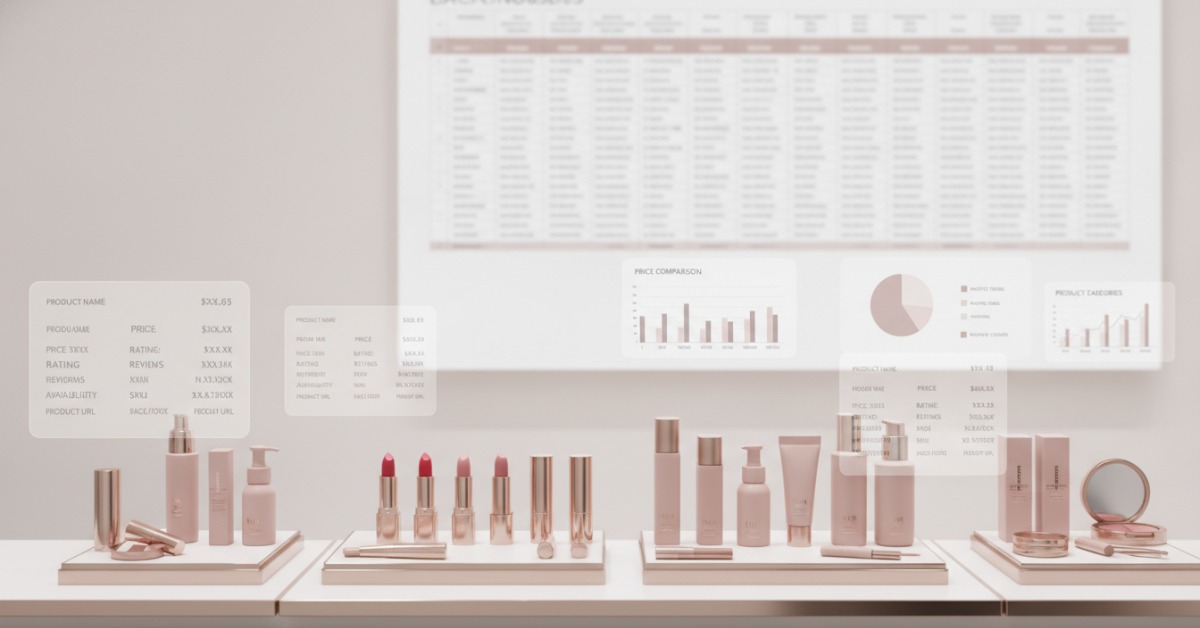
For beauty brands, this can include monitoring:
- Product names and SKUs
- Product URLs
- Prices and original prices
- Discounts and promotions
- Product descriptions
- Ingredients and product attributes
- Product categories
- Availability and stock status
- New product listings
- Product removals or discontinued products
- Product variants and sizes
Rather than looking at a competitor website as a static catalog, monitoring turns it into a stream of market signals.
How to Track Competitor Product Launches Step by Step
1. Identify the competitors you need to monitor
Start with a defined competitor set instead of attempting to track every beauty brand in the market.
Consider direct competitors selling similar products, emerging brands competing for the same audience, premium brands entering your category, and brands known for frequent product launches.
For example, a skincare company might monitor competitors in categories such as:
- Facial serums
- Moisturizers
- Sunscreens
- Cleansers
- Eye treatments
A focused competitor list makes the data easier to analyze and reduces irrelevant signals.
2. Collect competitor product URLs
The next step is to identify the specific product pages and category pages that matter.
This is where competitor URL tracking for beauty brands becomes valuable. Instead of repeatedly navigating through competitor websites, teams can create a defined list of URLs and monitor changes to those pages.
You can track individual product pages, category listings, collections, or other relevant URLs depending on your competitive intelligence goals.
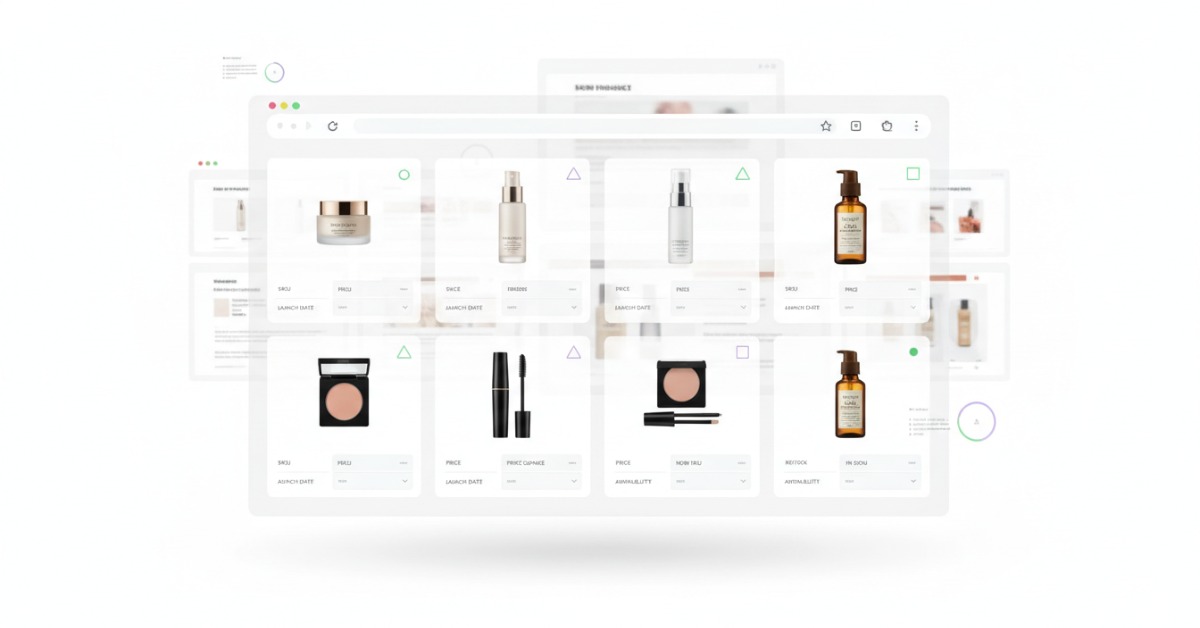
3. Monitor new product listings and SKUs
One of the most important signals is the appearance of a new product.
Competitor SKU monitoring can help identify when competitors add products, introduce new variants, expand an existing range, or enter a new category.
For example, if a competitor known for moisturizers suddenly launches three barrier-repair serums, that may indicate growing demand around skin barrier products.
The important insight is not simply that a new SKU exists. It is what SKU tells you about the competitor's product strategy.
4. Track pricing alongside new launches
A new product launch should not be analyzed in isolation.
Track the launch price, comparable competitor products, promotional pricing, product size, and price changes over time.
This is where beauty competitor price tracking can add another layer of competitive intelligence.
For example, suppose a competitor launches a 50 ml serum at $38 while comparable products in the category average $28. That positioning could indicate a premium strategy.
If the product is launched at $38 and discounted to $29 shortly afterward, the pricing strategy tells a different story.
Combining product and pricing data gives brands more context than tracking either signal separately.
5. Track competitor product listings across retailers
Competitors do not always launch products on every channel simultaneously.
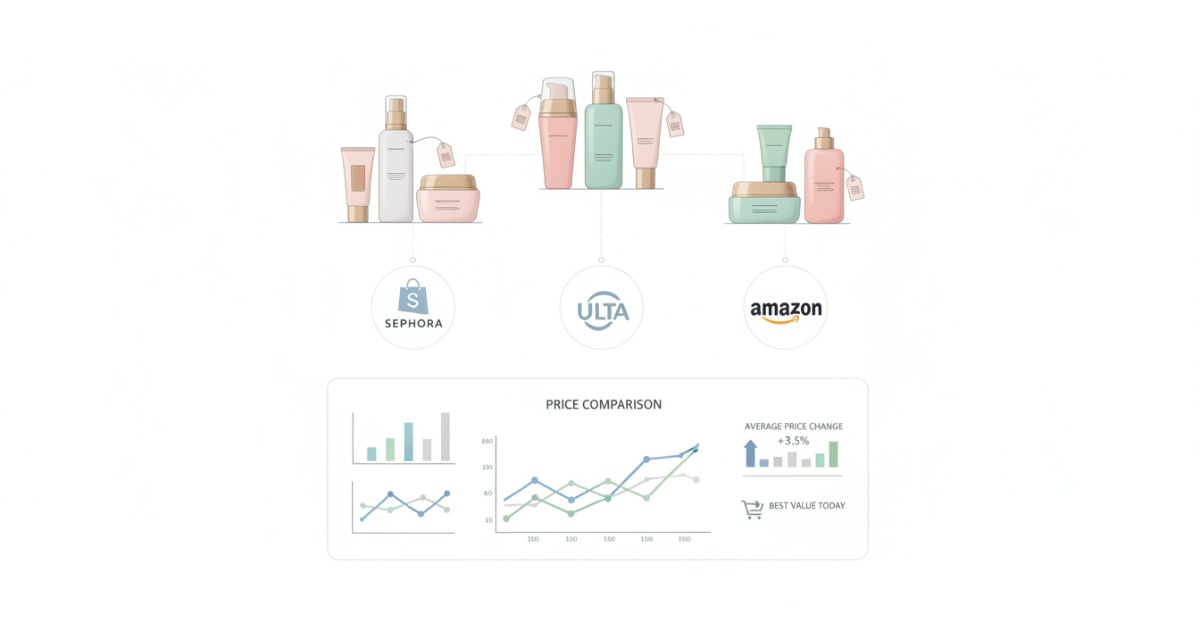
A new product might appear first on a brand website, followed by Sephora, Ulta, Amazon, or another retailer.
Therefore, brands should track competitor product listings across the retailers and marketplaces relevant to their category.
This can reveal:
- Launch timing by retailer
- Retailer expansion
- Product availability
- Pricing differences
- Promotional activity
- Assortment changes
Cross-retailer monitoring is particularly useful for brands operating in multiple markets.
6. Analyze what changed after the launch
Tracking the launch is only the first step.
The more useful question is:
What happened after the competitor launched the product?
To understand this, monitor changes in price, stock availability, product descriptions, reviews, ratings, promotions, and related product listings.
This helps answer the question of how to track competitor activity after product launch.
For example, if a competitor launches a new foundation and then expands its shade range, changes its product messaging, and introduces promotions, those changes can reveal how the brand is responding to customer demand.
What Should You Monitor After a Competitor Launch?
A useful competitor monitoring system should track more than new product announcements.
Product and SKU changes
Monitor new SKUs, new variants, size changes, bundles, and product removals.
Pricing changes
Track launch prices, discounts, price increases, and changes relative to comparable products.
Availability
Monitor when a newly launched product becomes available, goes out of stock, or returns to inventory.
Product messaging
Track changes to descriptions, claims, benefits, ingredients, and other product information.
Assortment expansion
Look for patterns across categories. One new product may not mean much, but five launches within the same category could indicate a broader strategic shift.
What Is the Best Competitor Product Monitoring Tool?
The right competitor product monitoring tool depends on how many competitors, products, retailers, and markets you need to track.
Manual monitoring can work for a small number of products, but it becomes difficult to maintain as the number of URLs and SKUs increases.
An automated approach can continuously collect structured information from selected competitor product pages and identify changes in product data.
For beauty brands, the most useful system should combine product tracking with pricing, availability, and launch monitoring rather than treating each signal separately.
How Beauty Feeds Helps Track Competitor Products
Beauty Feeds provides URL-level competitor monitoring designed for beauty and personal care products. Brands can monitor specific competitor product pages and track signals such as product pricing, discounts, stock status, descriptions, and newly launched products.
This makes it possible to move from manual competitor research to structured product intelligence.
Instead of asking your team to repeatedly check competitor websites, you can define the competitor URLs and products that matter, collect the relevant product signals, and use those changes for competitive analysis.
For brands focused on pricing, assortment, launches, or market research, this data can also be combined with broader beauty product datasets to understand competitor movements at scale.
Explore Beauty Feeds to see how beauty brands can monitor competitor product pages and detect important product changes.
Final Takeaway
Competitor product tracking is not simply about finding out when another beauty brand launches a product. The real value comes from understanding what the launch means.
By monitoring competitor SKUs, product listings, pricing, availability, product messaging, and assortment changes, beauty brands can identify emerging trends and respond with better product, pricing, and merchandising decisions.
The most effective approach is to move from occasional competitor research to continuous competitor product monitoring. When the right product data is collected consistently, every competitor launch becomes a potential source of market intelligence.