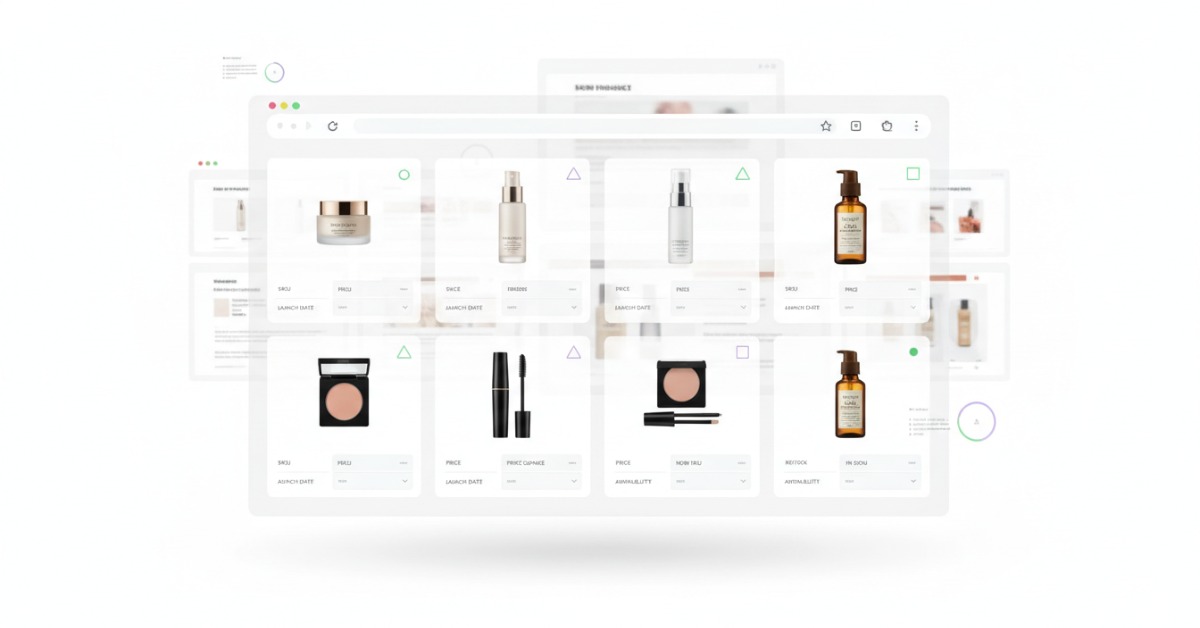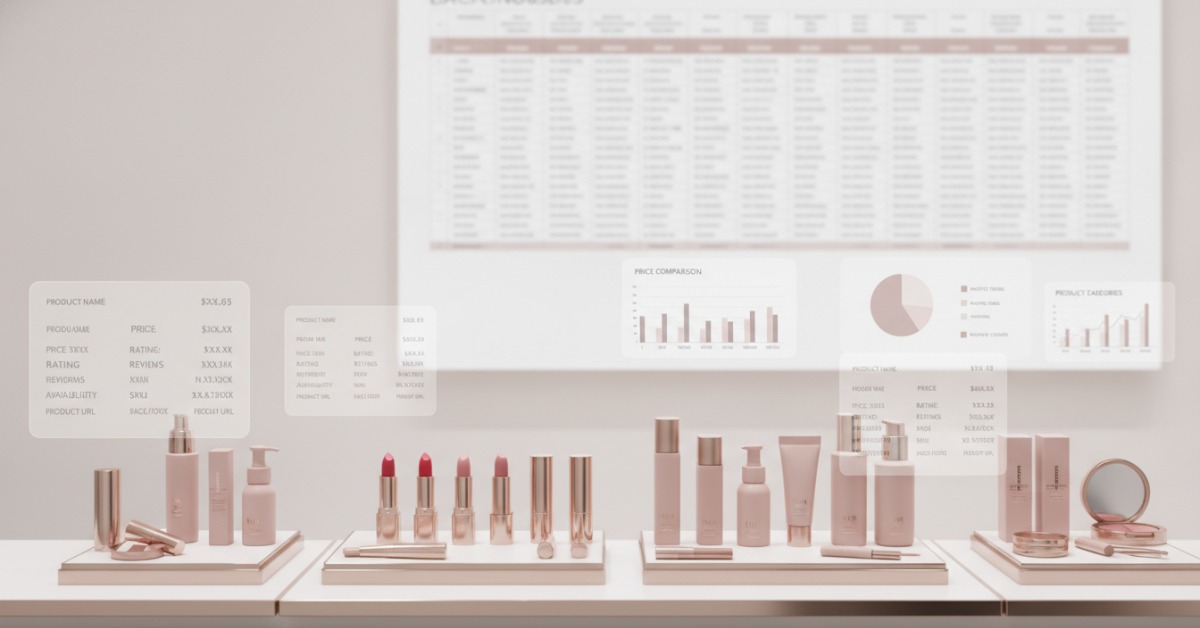
An Ulta dataset provides structured information about products sold through Ulta Beauty, helping businesses analyze product listings, pricing, availability, ratings, reviews, brands, and categories.
BeautyFeeds provides structured beauty retailer data and a sample Ulta lipstick product listings dataset for product research, competitive analysis, and market analysis.
BeautyFeeds provides structured beauty retailer data and a sample Ulta lipstick product listings dataset for product research, competitive analysis, and market analysis.
What Is an Ulta Dataset?
An Ulta dataset is a structured collection of product information sourced from Ulta's online retail catalog. Depending on the dataset, it can contain product names, brands, categories, prices, product URLs, ratings, reviews, ingredients, availability, SKUs, and other product attributes.
The exact fields depend on the dataset and collection scope. For example, the BeautyFeeds sample catalog includes an Ulta Lipstick Product Listings Dataset with 2,090 records in Excel format.
This type of Ulta product data can be used to study how products are positioned, priced, categorized, and presented across the beauty market.
What Data Can an Ulta Beauty Dataset Include?
The fields available depend on the dataset. Common categories of Ulta product data include:
- Product name and brand
- Product URL and SKU
- Product category and subcategory
- Product description
- Price and sale price
- Product availability
- Size and shade information
- Product images
- Ingredients
- Average rating
- Review count
- Customer review text
- Product variants
- Product identifiers
A comprehensive third-party Ulta dataset, for example, lists fields covering product information, pricing, availability, ratings, review counts, categories, ingredients, SKUs, product IDs, and product URLs.
This makes structured data useful for both product-level research and larger market analysis.
How Can You Analyze Ulta Product Data?
An Ulta product dataset can be analyzed across multiple dimensions instead of reviewing product pages individually.
1. Product assortment analysis
Group products by:
- Brand
- Category
- Product type
- Price range
- Shade or variant
- Ingredients
- Availability
This can help identify which categories have the largest product assortment and where particular brands are concentrated.
2. Ulta pricing data analysis
Ulta pricing data can be used to compare regular prices, promotional prices, and price ranges across products.
For example, a beauty brand can analyze:
- Average price by category
- Price differences between brands
- Discount frequency
- Premium versus mass-market products
- Pricing changes over time
Historical pricing data can also help identify promotional patterns and changes in competitive positioning.
How Can an Ulta Reviews Dataset Be Used?
An Ulta reviews dataset can provide a more detailed view of customer feedback than star ratings alone.
Review-level data can be analyzed for recurring themes such as:
- Product performance
- Texture and application
- Shade satisfaction
- Packaging complaints
- Skin or hair concerns
- Product quality
- Customer expectations
For example, reviews for lipstick products can be grouped by recurring complaints about pigmentation, longevity, shade accuracy, or application.
Combining review counts, ratings, and review text can help researchers understand which product characteristics generate positive or negative customer responses.
Know more: Discover ULTA Beauty Collections with Beauty Feeds
Know more: Discover ULTA Beauty Collections with Beauty Feeds
What Can You Learn From an Ulta Dataset?
The main value of an Ulta dataset comes from combining multiple fields rather than analyzing individual attributes separately.
Businesses can use structured data to investigate:
Competitive pricing: Compare products and price points across brands and categories.
Product trends: Identify categories, ingredients, shades, or product types appearing frequently in the market.
Assortment gaps: Find product categories or attributes with relatively limited competition.
Product performance: Compare ratings and review volumes across products.
Brand research: Analyze how different brands position products across price ranges and categories.
Market research: Study the broader beauty product landscape using structured retailer data.
How BeautyFeeds Helps With Ulta Product Data
BeautyFeeds provides structured beauty market data across major beauty retailers, including Ulta Beauty. Its platform provides product, pricing, stock, ingredient, and review data through datasets and APIs.
For users researching lipstick products specifically, the Ulta Lipstick Product Listings Dataset provides a focused sample of 2,090 product records in Excel format.
This focused dataset can be useful when the research question is limited to lipstick products rather than the entire Ulta catalog.
Who Uses Ulta Beauty Data?
An Ulta beauty dataset can support several types of research and business activities:
- Beauty brands monitoring competitors
- Market researchers studying product trends
- Retail analysts comparing pricing
- E-commerce teams researching product assortments
- Data teams building beauty market databases
- Product teams analyzing customer feedback
- Researchers studying beauty categories and consumer preferences
The appropriate dataset depends on the research objective. A product-listing dataset is useful for assortment and catalog analysis, while review-level data is better suited to customer sentiment and feedback research.
Why Use Structured Ulta Data?
Manually collecting product information from thousands of listings is difficult to maintain and compare. Structured datasets organize information into consistent fields that can be filtered, grouped, analyzed, and integrated into research workflows.
For example, instead of manually comparing lipstick listings, analysts can filter a dataset by brand, price, product category, availability, or other available fields.
This makes an Ulta dataset useful for repeatable product research and competitive analysis.
Final Takeaway
An Ulta dataset can turn large volumes of beauty retailer information into structured data for product, pricing, review, and market analysis. The right dataset depends on the fields and coverage required for the project.
The BeautyFeeds Ulta lipstick product listings dataset provides a focused starting point for analyzing Ulta's lipstick assortment, while broader beauty datasets can support pricing, product, ingredient, availability, and review analysis across the retailer